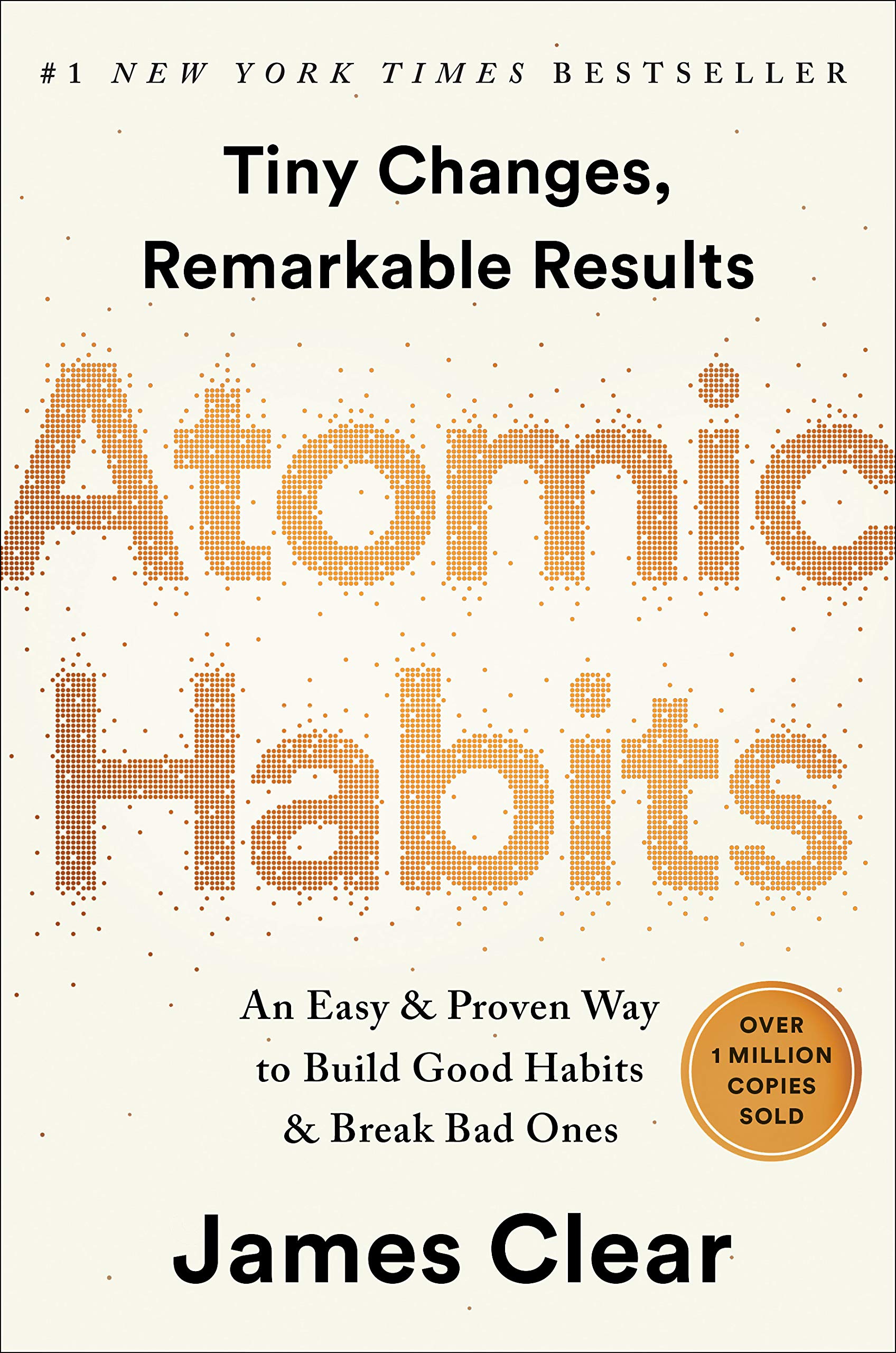
Atomic Habits is a different book, more granular and if you’re interested in personal productivity then it’s a good read.
In the book James first sells the value of habits, discussing how small incremental changes each day are vital to achieving major results. Then he moves on to deconstruct the various parts of a habit including Cue, Crave, Response, Satisfaction. In other words something triggers our habit, then we develop a craving for something, we act in a pre-trained way to satisfy that craving, and gain satisfaction.
In a positive habit this may look like:
Every morning when I get up
I want to clear my head
So I meditate
And feel better afterwards
However, in a negative habit this could be:
When I’m bored
I crave entertainment
So I open social media
Which entertains me
James then talks about how to hack these habits by eliminating cues, changing rewards, and building commitments so the habits you do want to form stick and the ones you don’t are broken. It’s good, sensible stuff.
As I mentioned above there’s a LOT of crossover with Routine Machine, however Atomic Habits goes far more into the techniques for forming and breaking daily habits. In his book Mark Lamberton focuses on how to point these in the direction to achieve big things. I see the two books as a very valuable pairing because, if I was to raise a criticism with Atomic Habits there’s not enough pagespace dedicated to creating structure so habits point you towards your longer term goals (although the idea of reinforcing identity is a very good one – see “Habit 2” of 7 Habits of Highly Effective People).
I listed my 2021 goals in an earlier post and I think there’s lots that can help me here. Specifically I want to work on the cues and immediate satisfaction of my reading, writing, and blogging. Perhaps putting together a calendar so it’s very obvious which days/weeks I’ve missed.
Have you read Atomic Habits? What did you think of it and have you encorporated any of it’s advice into your daily routines?
Like many people the constant bombardment of notifications, messages, emails, and reminders can be overwhelming. Our brains are wired to give us a little shot of dopamine for every “Like” we get or each time someone sends us a message. The most addictive mobile games capitalise on this by setting short terms goals staggered through the day which encourage us to pick up and play over and over again. It’s fair to say that it turns us all into a bunch of phone zombies.
Mobile phone addiction is real and I’m a sufferer! Photo by Zen Chung on Pexels.com
Knowing I’m especially guilty of “just upgrading that building” or “just reading that email” while I’m trying to work and spend time with my family I was curious when I discovered Forest.
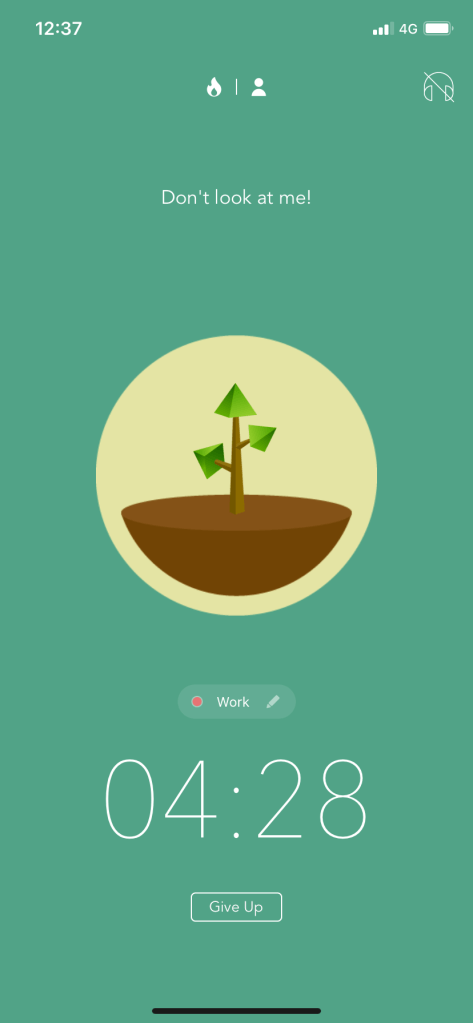
Forest is well aware of all those little dopamine triggers but uses them for good, not evil. The premise is simple. You select how long you want to put your phone down for and plant a tree, if you leave the forest screen to use social media, read your email, or look at pictures of cats then your tree will wither and die. The more successful times you leave your phone alone the more gold you earn, the more trees you can unlock, and the more real life trees which will be planted because of you.
It’s sneaky, but it works. I’ve written this blog post without looking at my phone once (well, except to capture the screenshot). Within a few days I found myself avoiding picking up my phone to answer calls or take photos during my Work or Family time. A far cry from when I’d jump at every text message to reply immediately.
Do you already use Forest (or something like it)? Do you have any other tricks for helping you focus and avoid mobile distractions?
When I saw a copy of The Advantage on the shelf at the airport I picked it up straight away. I read Five Dysfunctions of a Team a few years ago and considered it leadership gold. Learning about organisational health from the same author, sign me up!
I’m disappointed to say that for me, The Advantage just didn’t hit the same high notes. Despite only being 216 pages the book took me around eighteen months to complete and that’s simply because I wasn’t engaged and I felt I had to force myself through the final few sections.
The early part of the book recovers a lot of the same ground as Dysfunctions, I have no problem with that. Creating a leadership team who feel safe and can operate together as a team is no doubt a key part. Then we moved onto organisational values, both desired and acididental. I found that part quite interesting but when we moved onto creating and reinforcing clarity I drifted and drifted.
It’s quite possible I missed the point, the book is highly rated on Goodreads so many people have clearly got a lot from it. Unfortunately, this won’t be one I pick up and re-read again in a hurry. I will however go away and try to define my teams’ values – I grant, that’s a very valuable exercise!
Have you read The Advantage? Do you disagree with me? Let me know either on Twitter or in the comments, I’m always happy for someone to point out something I’ve missed!
I recently did a talk at DDD2020 on People Skills and one of the questions I recieved afterwards intrigued me enough to want do write about it.
How relevant do you feel non verbal communication is while we’re all work remotely?
At a very simple explanation high level I’d say absolutely essential because of the increased reliance on Email and IMs during the Covid-19 pandemic. The fact that this question was asked over Teams really hammered that point home.
While working remotely all communication except phone and video calls are non-verbal. Photo by Mitchel Durfee on Pexels.com
But what I thought made this question especially interesting was when I started thinking about the most effective communication mechanisms when working remotely. Doist have written some brilliant blog posts on working remotely and async communication which I highly recommend you read. This means our non-verbal skills have to be absolutely on point. Doist recommend overcommunicating, making timesales clear, and really thinking about your mechanism for communicating (as well as many many other great tips). You can’t just fire off a skype message when your colleague is on the other side of the world, at least not if you expect a response any time soon. Proper thought out communication and strategies for sharing and storing information and making decisions is key.
There’s also a lot to be considered in the non-verbal of verbal communication methods. It’s much easier to get distracted during a phone call when you’re sat at your computer with your email and web browser open. I mentioned in my talk how people pick up on signs of a higher cognative load, how many times have you been speaking with someone and you’re aware they’re tapping away on their keyboard. While we may see it as efficient multitasking I can assure you the person you’re speaking with considers you rude and distracted.
Where and how we use the camera is also a key factor. I use a built in webcam and a secondary monitor. This means that if I want to see what someone is sharing I drag them over to the larger monitor and read it there. This, means that even though I’m paying complete attention to what the person is telling me I have a distracted, uninterested look to them. It’s often worth ensuring that you’re looking at the camera, rather than the image when you’re speaking with someone. At the very least make sure you’re looking vaguely at them and not off into the distance somewhere. A piece of advice I was given recently was to think of a video call like an interview for the BBC. Consider what you’re wearing, consider your background, and look into the camera – not at the interviewer. It’s extreme, but it is all true!
Consider how you appear on a video call, being visible isn’t enough. You have to appear engaged for the non-verbal communication to be valuable. Photo by Ekaterina Bolovtsova on Pexels.com
Without non-verbal communication our remote work would be much much harder, we’d be forced to sit on phone calls all day and we’d have no flexibility in our calendars to do the important stuff like, you know, work. Unless our written communication is organised and clear we stand no chance in cutting down the number of meetings we’re in. However, we have to be extremely important when we are having verbal communications, webcams – although an amazing technology can help us send the wrong message. Consider how you’re being perceived by the other person, being visible isn’t enough. And remember, those 1:1s are just as important whether you’re on the phone or sat around a table, resist the tempation to check your email at the same time!
I read this book a few years ago and really would recommend it. I believe it was mentioned in The Phoenix Project and I added it to my reading list.
Much like Gene Kim’s work Five Dysfunctions is a story, in this case of an exec team at a high flying company who are struggling. They have all the best people, but the company is failing.
Lencioni talks about how safety acts as the foundations for a team to be able to challenge each other and succeed. It really hammers home how people feeling comfortable sharing their strengths and weaknesses leads to dull meetings, lack of accountability, and poor results.
Not a difficult read, lots of useful information – definitely one to add to your reading list if you’ve not read it already.
I had an epiphany the other day. I’ve long believed that the number of meetings in your calendar was some kind of function of the size of your organisation and seniority. As a people manager at a company of over 8000 people my calendar gets pretty full on (I dread to think what my boss’ looks like).
I was commenting to my wife while making a drink that I was invited to seven different meetings over the next hour. She rolled her eyes at the ridiculousness of an overpacked calendar and I was about to smile ruefully when something struck me.
Letting meetings pile up and sit as “tentative” is a sign of indecision, a source of stress, and disrespectful to the meeting organisers who have requested my help.
When I have a block of fifty or more meetings a day in my calendar no one looking at it (including me) can actually tell whether I’m busy or not. Good productivity comes from having a plan of what to do with your time, not making it up on the spot.
We need to start owning our calendars not letting manage us!
Calendars should be a tool to keep us organised not a source of stress. So what did I do?
Immediately declined any meeting I wasn’t planning on going to with apologies
Ensured that I was never supposed to be in more than one place at once
Scheduled time to actually do the tasks I needed to do
This turned out to be an extremely therapeutic exercise, one I plan to repeat each week going forward. Time will tell if it leads to less indecision and procrastination!
What are your tips and tricks for managing your working day? How do you deal with excessive meetings?
It’s getting towards that time of year again, where have conversations with our managers about what they expect us to achieve over the upcoming year and we throw in a few “personal development goals” which won’t really matter when we’ve forgotten about them in twelve month’s time.
Somewhere personal development and annual performance have got mixed up somewhere here. Most companies base some element of their employees’ performance on how well they’ve met their goal. Personally I disagree with this. I believe there are three types of goals.
Goals which you need to meet to successfully perform in your role
Goals which form part of the team’s improvement plan
Goals which are designed to help you meet your long term career aspersions.
Ideally a goal should fit in to two or even three of these. However it’s the third option, goals for personal development I want to discuss in more detail.
Insert Cheesy Goals Picture Here
My grandad was a train driver, he drove everything from The Flying Scotsman to the first diesel Deltics. When he joined the railways he was given a number, everyone who subsequently joined would get a higher number. As the years went by and he progressed in his career The drivers with the lower numbers, who joined before him retired and he became the senior driver on the east coast mainline because he had the lowest number.
In today’s organisations we can’t sit and wait for the people ahead of us to retire for us to gain our promotions. I’m not suggesting that there wasn’t a lot of study involved to progress on the railway, however there was a lot more structure. If we want to progress in our careers we need to identify not only the gaps, but our long term objectives.
List a few of the people you believe are very successful. I admire Barak Obama, Dwayne Johnson, Bill Gates, and several others. None of these people became successful by chance. They envisaged their careers, their successes, and they made them happen.
Ok, enough motivational writing and comparing ourselves to famous millionaires. In his book Seven Habits of Highly Effective People, Stephen Covey advised his readers to Start With The End In Mind. In order to get a big picture view of your goals in life he suggests you write your own eulogy, or perhaps less morbidly, your retirement speech. What do you want people to say about you? What accomplishments would they list? If you find this too difficult visualise where you want to be in five years. What role do you want? What skills do you want to have?
The next step is to break down those ambitious goals into smaller steps. For example if you want to start your own business but don’t have any knowledge of sales then you may set yourself a goal to complete a sales training course. If you want to be working as an iOS developer then perhaps you have to release your own personal app to the app store?
Lets stop assuming that major change in our lives and our careers will suddenly happen. Successes like Microsoft, the presidency, and film careers don’t happen by accident. They happen because those people took small, measured steps, and smaller goals which we set ourselves and complete on a daily basis.
This is why your annual goals are so important. They’re your commitment to your personal progression and an opportunity to seek support from your manager and organisation.
Large scale change doesn’t happen by coincidence, it’s planned and happens through a series of small steps.
Our annual goals should reflect where we want to be in 12 month’s time, a step on the ladder of where we want to be in our grand vision. If we want to deliver on them we need to manage them, quarter by quarter, and even day by day.
This is why personally I don’t believe our personal development goals should factor into our annual performance reviews. However, as managers we want to coach people on their careers (not to mention meeting department goals). These are people’s personal and private goals and I don’t think any bonus or annual performance should be tied to those. But we work within the systems we’ve got!
So what should you do now?
Create a vision of what world domination looks like – what’s your super goal which you want to achieve over the course of your career (this can evolve as you go, today it just acts as a lighthouse of where to aim for).
Understand WHY you want to achieve that.
If that’s the end goal what significant steps could you make towards that vision in the next 12 months?
Discuss (if you wish) these 12 month goals with your manager.
Create an annual schedule, what will those 12 month goals look like as you move through the year? How will you know if you’re on track? Schedule these times in so you don’t forget
Reserve a little time each and every day to move one of those goals forward.
Don’t wait for that big ambitious career goal to mysteriously drop out of the sky. Make it happen, a little each day until you’re there.
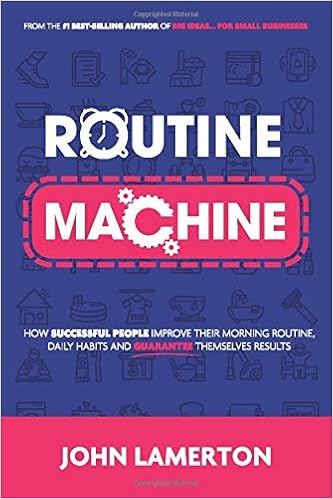
This morning I finished listening to Routine Machine on audible. The book is by John Lamerton, who describes himself as The King of Routine and in it he discusses the power of a good routine and how it helps him (and many others) achieve financial suggess and good health.
I’d highly recommend it. There are some really good ideas in there and it really gets you thinking about long terms goals and the small steps we take each day (how agile is that) towards achieving them.
Of course the book isn’t perfect, there are a few ideas and comments I really don’t like. Especially around the Director or Investor of any company locking himself away for a week to write a book and ignoring all emails and messages of people who work for him who require help with emergencies. I take John’s point on board – that he shouldn’t be a bottleneck and that these emergencies often don’t actually need his help. But I can’t help thinking that he and Simon Sinek would have a very heated debate on that one!
However, there was so much I did find valuable that I’d recommend you read it to. Here are my highlights:
Big goals aren’t achieved by a few big actions, we achieve them by doing lots of good little actions day after day, week after week, year after year.
The biggest asset you have to achieving success is time, don’t expect success overnight – aim for it and embed the habits you need to make it happen into your daily routine.
Track these habits in an excel spreadsheet (other spreadsheets are available) and give yourself gold stickers to ensure that they are sticking.
Don’t bite off too much too soon.
Don’t read books without taking the message way. Read the book, follow the instructions.
Identify what’s important and make sure you schedule time for those things first. Put the big immovable objects in your calendar first, not the day to day 30 minute meetings we’re all a slave to.
Although John told me to write a review I don’t want to share all the advice (because second hand is never as good as the source). Instead, if I’ve peaked your interest then grab a copy and have a read.
If you’d like to read a free chapter of his book you can here.









 dotdotdev.com