I have been lucky to work with a number of recruiters over the years. They provide an essential service advertising and pre-screening candidates who come for the roles I’m looking for.
I recently discussed this series of blog posts with Matt, a friend of mine at 4IT Recruitment and he was keen to offer his advice for people looking to get involved in the industry.
Recruiters do a great job advertising roles and preparing candidates for interview. Photo by Polina Zimmerman on Pexels.com
I wanted to know more about the work that Matt and his colleagues do between getting a CV from a prospective candidate and brining them to my attention.
What makes a candidate’s CV stand out to you?
A Simple layout – Name and contact details at the top and easy to find’. Don’t use fancy boxes or colours and there’s no need for pictures etc (unless it’s for a UX role). You should include a a brief but non-generic profile at the top of the page with a bit of insight into your skills and experience. Consider adding a technical skills matrix right at the top where it’s really visible and always start with your strongest development language at the top.
We like to see projects you been involved in and where you used your skills, what methodologies you used, any associated technologies (e.g. if was a full stack role say that it was). Universities and schools should go at at the bottom with hobbies – for graduates you should put all the experience you’ve gained from university modules at the top in place of professional experience and start with any experience you have. Always include details of any placements or work experience opportunities you’ve had. Include details of the technologies you’ve used in the roles.
What advice do you always give a candidate before an interview?
Always research the company and understand what service/ product they offer before you go to speak to them. Review the job spec if you have one and think how you can speak about your skills with regards to the criteria for the role.
Talk about what you have been responsible for delivering personally, rather than listing the achievements of the the wider team and use as many examples with how you have used your skills in the past in ‘real life’.
Try to relax…it is as much an opportunity for you to find out about the company and role as the other way around.
Remember to ask the company questions about the role and about current staff… Why is the best developer you have the ‘best developer’ etc.what do they bring extra than all others to the team?
What do you wish more candidates knew when they went for an interview?
Candidates should always remember that hiring managers’ time is very limited so they should try to give detailed answers but stick to the point and then move on.
You only get one chance to make a first impression so don’t be afraid to be yourself.
Don’t be afraid to ask questions!
Never be afraid to ask for advice before going for an interview. Photo by mentatdgt on Pexels.com
Matt has given lots of great advice for anyone coming to an interview. If you’d like to get in touch with 4IT you either via LinkedIn or email.
Do you have any advice to give candidates preparing for their first big interview? What have you found that works for you – drop a comment below or contact me on Twitter. Don’t forget to subscribe so you don’t miss next week’s post!
Like many people the constant bombardment of notifications, messages, emails, and reminders can be overwhelming. Our brains are wired to give us a little shot of dopamine for every “Like” we get or each time someone sends us a message. The most addictive mobile games capitalise on this by setting short terms goals staggered through the day which encourage us to pick up and play over and over again. It’s fair to say that it turns us all into a bunch of phone zombies.
Mobile phone addiction is real and I’m a sufferer! Photo by Zen Chung on Pexels.com
Knowing I’m especially guilty of “just upgrading that building” or “just reading that email” while I’m trying to work and spend time with my family I was curious when I discovered Forest.
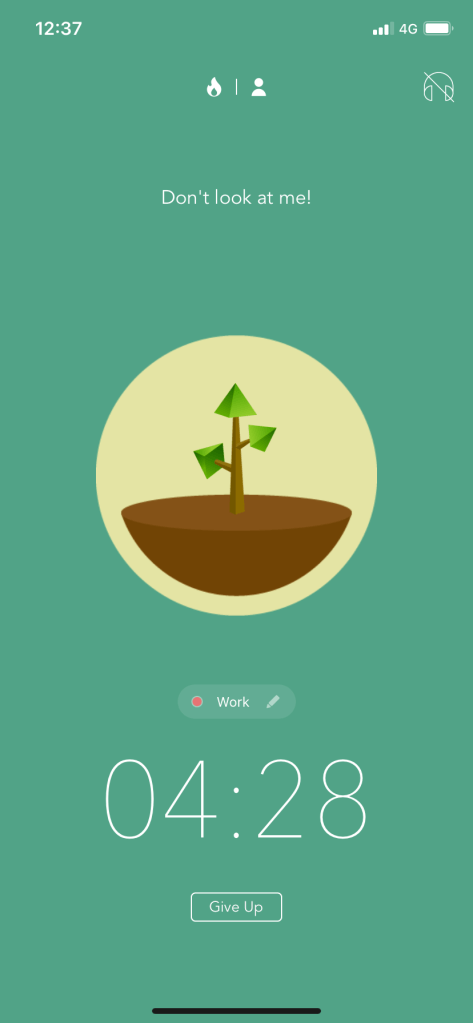
Forest is well aware of all those little dopamine triggers but uses them for good, not evil. The premise is simple. You select how long you want to put your phone down for and plant a tree, if you leave the forest screen to use social media, read your email, or look at pictures of cats then your tree will wither and die. The more successful times you leave your phone alone the more gold you earn, the more trees you can unlock, and the more real life trees which will be planted because of you.
It’s sneaky, but it works. I’ve written this blog post without looking at my phone once (well, except to capture the screenshot). Within a few days I found myself avoiding picking up my phone to answer calls or take photos during my Work or Family time. A far cry from when I’d jump at every text message to reply immediately.
Do you already use Forest (or something like it)? Do you have any other tricks for helping you focus and avoid mobile distractions?
While we may all enjoy our jobs being paid is kind of the whole point (don’t say that in an interview). But it’s extremely hard to know where to pitch when applying for a job. In this post I want to discuss the best approach to talking about salaries.
Let’s talk about getting paid. Photo by Karolina Grabowska on Pexels.com
When a hiring manager posts a job they usually have an upper limit or a salary band in mind. This is hard fought for in a budget conversation. The recruitment agents are usually aware of this figure.
My first piece of advice is to make sure your idea of salary and the hiring managers are aligned before you go into an interview. The reason for this is simple. You don’t want to waste your time (or the managers) if you’re applying for a role which either doesn’t have the budget you’re looking for or is offering to pay far above what you’re looking for (a good sign you’re not experienced enough). Going for an interview often involves taking a day of holiday from a current job or at least taking on some kind of expense. A quick (but sometimes awkward) conversation up front can avoid that.
Next up, there’s a little game recruitment agents (and sometimes hiring managers) like to play. They will often ask you what your current salary is and what you’re looking for. This is often very beneficial all around, it helps them gauge the current market rate for someone with your skills and will help make sure that you’re both looking in the same ball park (the same as I spoke with above). However, if you are being underpaid at your current role this can work against you. If I’m on a low salary and ask for a £20k pay rise I could well come across as greedy or over ambitious. Everyone wants a pay rise when they move roles, but don’t feel you have to give this information away if it will make your application less credible. It’s perfectly fine to say something like “Not enough – I’m really looking for £X”.
Which is where the next point comes in. Do your homework. Many roles don’t advertise the salary expectations on the advert, this is to avoid sharing with internal employees and disclosing other people’s salaries. However, it’s also very frustraiting for the applicant. Especially when one company pays one amount for a Senior Developer and another pays something completely different. Use tools like LinkedIn’s Salary Checker and to get an expectation of what a role is likely to pay. Be aware, this will change vastly by where the job is based!
The salary for a role will vary from city to city, even more from region to region or country to country. Photo by Karolina Grabowska on Pexels.com
There are a few situations where you won’t have a lot of flexibility on salary. If you’re applying for a role in a very structured organisation the salary bands may be set with no room for negotiation. Also, if you’re one of a number of new starters (for example in a graduate scheme) then the salary may be fixed. After all if you’re hiring twenty people to do the same role at the same time it would be highly inappropriate to offer one person more money.
Salary negotiations are not the easiest discussions to have but hopefully I’ve provided some insight and advice. Please get in touch or add a comment below if you have any questions and as always please subscribe and then share this series with anyone you think may find it useful.
When I saw a copy of The Advantage on the shelf at the airport I picked it up straight away. I read Five Dysfunctions of a Team a few years ago and considered it leadership gold. Learning about organisational health from the same author, sign me up!
I’m disappointed to say that for me, The Advantage just didn’t hit the same high notes. Despite only being 216 pages the book took me around eighteen months to complete and that’s simply because I wasn’t engaged and I felt I had to force myself through the final few sections.
The early part of the book recovers a lot of the same ground as Dysfunctions, I have no problem with that. Creating a leadership team who feel safe and can operate together as a team is no doubt a key part. Then we moved onto organisational values, both desired and acididental. I found that part quite interesting but when we moved onto creating and reinforcing clarity I drifted and drifted.
It’s quite possible I missed the point, the book is highly rated on Goodreads so many people have clearly got a lot from it. Unfortunately, this won’t be one I pick up and re-read again in a hurry. I will however go away and try to define my teams’ values – I grant, that’s a very valuable exercise!
Have you read The Advantage? Do you disagree with me? Let me know either on Twitter or in the comments, I’m always happy for someone to point out something I’ve missed!
The interview is the most famous part of any job application process. Some senior jobs require you to go through two or more interviews but nearly all roles require you to sit down face to face with two or more people and answer questions. Even in these socially distance times when interviews are being conducted remotely it’s still an important skill to master.
The internet is full of interview advice (some of it good) so I’m going to try to approach this slightly differently and describe it from a hiring manager’s point of view.
Knowing what the interviewer is looking for goes a long way in an interview. Photo by Alex Green on Pexels.com
I’ve run through CVs and I’ve selected a short list of candidates I want to speak with. I may have had a few phone conversations along the way. Personally I only have two or three people on my interview list at any one time, different people may have different styles here but if I find someone I want to make an offer to I don’t want to have to wait while I interview ten other people before making that offer. I’d rather have a pipeline of candidates coming through the process knowing I can stop and offer whenever the right person comes along.
There’s a lot of time and effort invested from both sides for an interview (usually a good half a day for even a one hour interview) and you may be asking the candidate to travel and take time away from courses or work so I don’t invite someone in on a whim, I only invite people I believe could fulfil the job’s requirements.
Let’s start with the obvious stuff. Don’t be late. I don’t care if that means you have to sit in a carpark for an hour. Don’t be late and don’t get lost. Scout out your route to the interview location beforehand if that helps, if you’re making a more substantial trip then make sure you leave enough time for Murphy. If you are unavoidably delayed then call ahead and get a message to me. Trains break down on everyone, a professional will get in touch and let me know rather than leaving me sitting in an empty meeting room by myself. Believe me, that’s not a good way to make a great impression!
What to wear? I’m far from a fashion guru so I don’t want to give bad advice here. However, over the last few years I’ve been a bit less formal with my dress when I’m being interviewed (in other words I’ve lost the tie). However, I still wear a suit. The best advice I can give is dress how you would if you were representing the prospective company to a client. You want to be smarter than regular office wear but you’re not going to a black tie event. Personally I’d never wear jeans.
Try to dress how you would if you were representing the company at a visit to one of their clients. Photo by mentatdgt on Pexels.com
You’ll most likely be interviewed by two people. This is for a couple of reasons but the most important is to get two different points of view. Don’t try and work out who the decision maker is, if they’re worth working for they’ll take their colleague’s view very seriously. Address anwers to the person who asked them and (I’m sure this is obvious) be polite and repectful to everyone you meet.
In terms of the interview itself I usually try to start simple. I want the candidate to relax and lose a few of the inevitable nerves. I usually ask something about what you’re currently studying or what you’re working on. Remember that I’ve read your CV. Don’t go overboard here, don’t bore me but tell me the interesting bits. Try not to turn a five minute question into a twenty five minute one because of nerves!
At some point early in the interview I’ll most likely describe the company and the role. Again, I’m expecting you already know most of this so the point of this is to give you a chance to ask any questions and to engage in a little light conversation before we move onto some of the more technical stuff.
There will inevitably be some questions coming. These usually fall into one of two camps, either they’re competency questions or they’re skills question.
Skills questions are designed to assess your knowledge in a particular technology. For example, one of my favourites for a C# role is to ask someone the difference between an array of strings, a list of strings, and an IEnumerable of type string. This isn’t an easy question, I like it because a junior will give me one answer and a much more senior will give me another – but they could both be correct. However, the real question here is what to do when you’re faced with a skills question you don’t know?
What can you do in an interview when someone asks you a question you don’t know the anser to? Photo by Andrea Piacquadio on Pexels.com
That’s easy. You should simply say you don’t know. Or (assuming it’s true) tell me that you are having a mind blank and can’t remember. We’re engineers, we’re not search engines. We look things up and use intellisense. You may know more about garbage collection than I do, I may know more about IoC than you. The point of the skills questions are to get an idea of your technical strengths and weakesses. I don’t want to hire someone who will simply doesn’t possess the skills I require of them. For entry and junior roles I’m assuming you won’t know everything, it’s ok not to now!
I’m sure it goes without saying, but please don’t try to bluff me. Not only will it not work (I’ve hired a lot of engineers) but it won’t help, all that will happen is you’ll find yourself in a role which won’t suit you.
The second type of question you’re likely to encounter is the Competency Question. A competency is something like Problem Solving, or Personal Development. You can often work out which of these you’re going to be faced with by looking at the job advert. If the job description says that I’m looking for someone with A Proven Ability to Learn, Problem Solving Skills, and Resilience then there is a fair chance I’m going to have a question for each of those asking you how you’ve demonstrated them in the past.
For example, if I may ask you to describe a problem you had no idea how to solve and how you overcame it. Or I could ask how you’ve recovered from a severe setback. These are not easy questions to answer but with a little up front planning you can think of the answers you’re going to need through well before the interview. The best answers give a good example and don’t waffle. For example if I was asked about a problem I didn’t know how to overcome I could describe who I sought advice from, or how I wrote down fifty ideas and selected the best five, or I could talk about the time I needed help with my disseration and I asked my professor for advice.
It’s important to note, especially with junior roles that I’m not expecting you to be able to walk in and do the job. What I want you to persuade me is that if I made you an offer you’d be able to grow into the role. That’s why these questions are really important. Fail to prepare at your peril!
Most interviews for junior positions will last around an hour although some may last longer, especially if they involve technical tests (which I’ll cover in a future post) or form part of a larger assesment centre (again, hopefully a future post).
Towards the end of the interview I will usually offer the chance for the candidate to ask me any questions (although there’s no reason they can’t raise them before then). Honestly, I’ve heard them all. My suggestion is that you focus on questions about the role and the company and show interest in the opportunity. For example “Can you describe what the team are working on now?” is a better question than “How many days holiday do I get?”
One final point, despite what you see on TV it’s very rare to be offered the role in the interview. Don’t lose faith if it takes a few days.
I hope this has been of some help. Please feel free to get in touch if you have any questions. What are your best suggestions for good interviews? Remember to subscribe and follow me on twitter so you don’t miss out!
I recently did a talk at DDD2020 on People Skills and one of the questions I recieved afterwards intrigued me enough to want do write about it.
How relevant do you feel non verbal communication is while we’re all work remotely?
At a very simple explanation high level I’d say absolutely essential because of the increased reliance on Email and IMs during the Covid-19 pandemic. The fact that this question was asked over Teams really hammered that point home.
While working remotely all communication except phone and video calls are non-verbal. Photo by Mitchel Durfee on Pexels.com
But what I thought made this question especially interesting was when I started thinking about the most effective communication mechanisms when working remotely. Doist have written some brilliant blog posts on working remotely and async communication which I highly recommend you read. This means our non-verbal skills have to be absolutely on point. Doist recommend overcommunicating, making timesales clear, and really thinking about your mechanism for communicating (as well as many many other great tips). You can’t just fire off a skype message when your colleague is on the other side of the world, at least not if you expect a response any time soon. Proper thought out communication and strategies for sharing and storing information and making decisions is key.
There’s also a lot to be considered in the non-verbal of verbal communication methods. It’s much easier to get distracted during a phone call when you’re sat at your computer with your email and web browser open. I mentioned in my talk how people pick up on signs of a higher cognative load, how many times have you been speaking with someone and you’re aware they’re tapping away on their keyboard. While we may see it as efficient multitasking I can assure you the person you’re speaking with considers you rude and distracted.
Where and how we use the camera is also a key factor. I use a built in webcam and a secondary monitor. This means that if I want to see what someone is sharing I drag them over to the larger monitor and read it there. This, means that even though I’m paying complete attention to what the person is telling me I have a distracted, uninterested look to them. It’s often worth ensuring that you’re looking at the camera, rather than the image when you’re speaking with someone. At the very least make sure you’re looking vaguely at them and not off into the distance somewhere. A piece of advice I was given recently was to think of a video call like an interview for the BBC. Consider what you’re wearing, consider your background, and look into the camera – not at the interviewer. It’s extreme, but it is all true!
Consider how you appear on a video call, being visible isn’t enough. You have to appear engaged for the non-verbal communication to be valuable. Photo by Ekaterina Bolovtsova on Pexels.com
Without non-verbal communication our remote work would be much much harder, we’d be forced to sit on phone calls all day and we’d have no flexibility in our calendars to do the important stuff like, you know, work. Unless our written communication is organised and clear we stand no chance in cutting down the number of meetings we’re in. However, we have to be extremely important when we are having verbal communications, webcams – although an amazing technology can help us send the wrong message. Consider how you’re being perceived by the other person, being visible isn’t enough. And remember, those 1:1s are just as important whether you’re on the phone or sat around a table, resist the tempation to check your email at the same time!
This is the third post in my coaching for junior developers series, a humble effort to help engineers find roles in 2021.
Your CV is a summary of your experience, it’s the your way of introducing yourself to the recruiter and hiring manager and is your first. There are countless guides out there for creating a good CV which I won’t try to outdo – what I’m going to do instead is write from my views as an experienced hiring manager.
Putting a good CV together is not easy, I always have to trim pages and pages out of mine whenever I do dusting. Striking a balance between what to include and what to cut is the eternal battle and two people giving you advice will always disagree with each other.
Putting a CV together is not an easy job, what do you leave in and what do you leave out? Photo by Samson Katt on Pexels.com
Lets talk about what the CV is actually for. In my opinion it has three purposes:
To list your core skills so the recruiter can match them against the job spec
To give a high level overview to the hiring manager to decide who to phone interview
To give the hiring manager something to ask you in your interview
Let’s take each of these in order.
Recruiters are usually non-technical but they’re well versed in filtering out people who know about the technologies they’re discussing and those who are bluffing. Their job is to find the best selection of candidates for the job description by matching skills and experience level. Your job is to make this as easy as possible for them. Look at the job advert, look at the skills they’re requesting and split them into three catagories. Skills you have, skills you want to aquire from the role. You don’t want to try to pretend to have skills you don’t have, don’t hide gaps, highlight what you can do and explain why you’d like to close those gaps.
One more tip for recruiters. I never send a blind CV to a recruitment agent. It’s one among hundreds and it’s too easy to get lost along the masses. I always call the agency beforehand and ask some questions about the role. Help demonstrate that you can communicate and will do well in any future phone interview they put you forward for.
Next, giving a high level overview of your skills. To a degree you’ve already covered this in the first part when you aligned your skills to the role to make it easy for the recruiter. However, what you need to do now is make your CV interesting among the masses. It’s extremely difficult for a hiring manager to decide who to speak to when they’re faced with overwhelming numbers of applicants who are all equally qualified. What you want to do is add a little personality to a list of previous jobs, skills, and qualifications. There are a few ways I’d recommend you do this:
Sumarise yourself in a couple of sentences, it’s a bit like opening a big presentation. Don’t go with “I am Adam Griffiths and I’m here to talk to you about…” that’s what everyone says. You’d go with “Do you know what most people get wrong in their CVs?” Now you’re listening. You want the equivalent, don’t say “After a three year computer science degree your role looks like the perfect fit for me.” Surprise me try “I’ve done my degree, now I want to know how real software is built!”
Consider adding a link to your LinkedIn profile (you do have a LinkedIn profile right?). Personally I don’t like pictures in CVs but I’m not going to start hunting around the internet to find your LinkedIn, GitHub, personal website, and any other account you’ve got active, list them – especially if this is your first role. Put a face to a name and show me what you’ve done. Don’t include social media which shows you downing a yard of ale in a tutu. While impressive I don’t hire people based on their party tricks at the end of year bash.
If you’re currently in a role put “references available on request”, companies will understand that you don’t want your referees contacted yet and it won’t be a problem. If this is your first role then go and track down your referees and ask their permission before using them as a reference.
Speaking of, if this is your first role your biggest experience is your project, disseration, any work experience you’ve done, and any learning projects. Once you’ve worked in the industry for a few years these will be replaced with professional projects.
How do you show experience when you are applying for your first role!? Photo by Andrea Piacquadio on Pexels.com
The last reason for your CV is to help prompt me with questions. When you come in for interview you’ll be nervous and panicking. One of the most common opening questions is to ask about your current role, or what you’re currently working on. This is because I want to help you relax by getting you to talk about what something you know. If you don’t tell me what you’ve been working on that question is much much harder. Help me to help you here!
Those are my biggest CV tips and suggestions. What do you think? Are they helpful? What would you add?
As I mentioned above this is part of a series of posts I’m running for people wanting to break into software engineering. Make sure your subscribed to my blog and are following @DotDotDevBlog on twitter so you don’t miss my other advice.
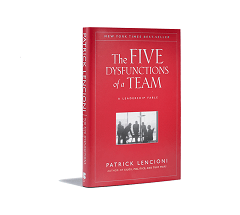
I read this book a few years ago and really would recommend it. I believe it was mentioned in The Phoenix Project and I added it to my reading list.
Much like Gene Kim’s work Five Dysfunctions is a story, in this case of an exec team at a high flying company who are struggling. They have all the best people, but the company is failing.
Lencioni talks about how safety acts as the foundations for a team to be able to challenge each other and succeed. It really hammers home how people feeling comfortable sharing their strengths and weaknesses leads to dull meetings, lack of accountability, and poor results.
Not a difficult read, lots of useful information – definitely one to add to your reading list if you’ve not read it already.
From the outside a recruitment process is fairly opaque. As someone applying for their first developer role it can be easy to get lost with who’s who. Let’s go through the high level journey of recruitment for a role.
The job interview is often only one small part of the hiring process. Photo by Christina Morillo on Pexels.com
Remember, the process will always be slightly different for each company and each person but the common building blocks are often there.
Company identifies they need an additional person and speaks with a recruitment agency (sometimes done by a specialist team withint the company) to post an advert and job description.
The applicant (you) see this advert and decide to apply.
You will most likely be asked to provide a CV and potentially a cover letter.
The recruiter will then shortlist a number of candidates, filtering out the people who are clearly unsuitable and share them with the hiring manager. They may do this by speaking with the applicants themselves before forwarding them on.
The hiring manager will then often select a subset of candidates to hold a telephone interview with, these are usually around 30 minutes long.
A small number of people are then invited in for a face to face interview (obviously in the current climate this may be done slightly differently).
The hiring manager then assesses each candidate and decides which, if any, would be suitble for the role.
Ok, so let’s assume you’re the selected candidate. What happens next?
The recruiter will most likely call you either way to get your impression on how the interview went. They will most likely update you on whether they’ve heard anything on whether the company intends to make an offer. Bear in mind that a hiring manager may have many interviews for a single role and will often wait until finishing all interviews before offering the role.
If you are selected then the recruiter will often give you a verbal offer, or let you know that the company intends to make you an offer. Nothing is binding at this stage but it’s often wise to give an honest view of whether you would accept or not. It would be impolite for you to let a company go through the efforts of getting a contract out to you if you have no intention of accepting.
The recruiter will most often want to discuss start dates with you. This is great news, however if you are in an existing role you shouldn’t hand in your notice until until you’ve read the contract from the new company. It’s safe to assume you’ll be able to start 2 weeks plus any notice period you currently have, but these can always be adjusted once you’ve agreed your last day.
You will be issued with a contract of employment which you will be asked to sign and return.
So there you have it, the entire process! I’m going to break these various steps down over the upcoming weeks but there are a few points I want to highlight now.
It’s a long journey from advert to offer! Photo by fauxels on Pexels.com
Sometimes, especially if a company is hiring multiple people in the same role they may run an Assessment Centre rather than going through the entiring process for each candidate. These are nothing to be afraid of, and can be a lot of fun. But it’s often very daunting to meet (and be expected to work with) people who are competing against you for a small number of roles.
It’s important that you’re assessing the company as much as they are judging you. Hopefully you’re going to be spending several years of your life at this organisation and working with the hiring manager. If you feel uneasy around them or don’t think you would fit in there then there’s nothing wrong with turning down a job offer. It’s disappointing for the hiring manager to lose someone they feel would be a good person for a role but if your aspirations are elsewhere you should listen to that.
Finally, a LOT of candidates apply for roles. Especially during difficult times (like we’re expecting in 2021). Look for ways to stand out. I’m not talking about bringing cake to the interview or wearing bright colours to the interview but think about what differentiates you and makes you unique. Make connections with the recruiter and hiring manager by asking questions and always show your interest.
I intend to cover recruitment in a lot more detail over the next few weeks but hopefully there’s enough here to get you started.
As always if there are any questions please get in touch and don’t forget to subscribe to the blog and follow me on Twitter.
I had an epiphany the other day. I’ve long believed that the number of meetings in your calendar was some kind of function of the size of your organisation and seniority. As a people manager at a company of over 8000 people my calendar gets pretty full on (I dread to think what my boss’ looks like).
I was commenting to my wife while making a drink that I was invited to seven different meetings over the next hour. She rolled her eyes at the ridiculousness of an overpacked calendar and I was about to smile ruefully when something struck me.
Letting meetings pile up and sit as “tentative” is a sign of indecision, a source of stress, and disrespectful to the meeting organisers who have requested my help.
When I have a block of fifty or more meetings a day in my calendar no one looking at it (including me) can actually tell whether I’m busy or not. Good productivity comes from having a plan of what to do with your time, not making it up on the spot.
We need to start owning our calendars not letting manage us!
Calendars should be a tool to keep us organised not a source of stress. So what did I do?
Immediately declined any meeting I wasn’t planning on going to with apologies
Ensured that I was never supposed to be in more than one place at once
Scheduled time to actually do the tasks I needed to do
This turned out to be an extremely therapeutic exercise, one I plan to repeat each week going forward. Time will tell if it leads to less indecision and procrastination!
What are your tips and tricks for managing your working day? How do you deal with excessive meetings?













 dotdotdev.com